Molecular Biology
About Us
The Molecular Biology Team utilizes polymerase chain reaction (PCR) based procedures, pulse-field gel electrophoresis (PFGE), and serological techniques to identify a variety of human and animal pathogens. Forms G-2A and G-2B can be used to submit the following specimens:
- Blood
- Tissue
- Nasopharyngeal swabs
- Sputum
- Stool
Testing Methods
PCR
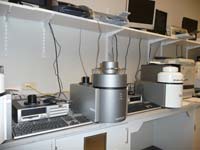 The polymerase chain reaction (PCR) method targets a specific gene for amplification. We currently utilize both conventional and real-time PCR (+/- reverse transcriptase) assays to detect the presence of genes specific to B. pertussis, West Nile Virus, St. Louis Encephalitis (SLE), Eastern Equine Encephalitis (EEE), Western Equine Encephalitis (WEE), Norovirus, and Shiga Toxin-producing E. coli. Efforts are in place to include PCR-based assays for the detection of Cyclospora, Cryptosporidium, E. histolytica, Giardia, Mycoplasma pneumoniae, Chlamydophilia pneumoniae, Rotovirus, and respiratory syncytial virus (RSV).
Serology
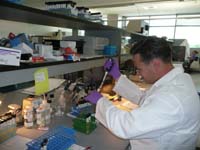 We use conventional serology techniques to identify serovars/strains of Salmonella and Shigella. The procedure begins by growing specimens on different types of media to give biochemical information. Next, we add various antisera to bacteria isolates and look for agglutination or "clumping," which is indicative of a positive result. Because different Shigella and Salmonella strains have slight variations of antigens on the outside of their outer membranes (e.g., lipopolysaccharide or LPS), only antisera specific for these molecules will induce agglutination. Therefore, this technique allows us to differentiate between the many strains of Shigella and Salmonella. The information gathered here allows epidemiologists to determine which cases may be connected during an outbreak.
PulseNet
The Texas Department of State Health Services (DSHS) Laboratory is the PulseNet Laboratory for the South-Central Area, which includes New Mexico, Louisiana, Arkansas, Oklahoma, Texas, the city of Houston, and the Texas State Chemist. PulseNet is an online database maintained by the Centers for Diseases Control and Prevention (CDC). This network allows member laboratories to upload data to aid in detecting foodborne and infectious disease case clusters. This data is obtained from PFGE, multiple locus variable number tandem repeat analysis (MLVA), and nucleic acid sequencing. The information from PulseNet facilitates early identification of common source outbreaks and assists epidemiologists in investigating outbreaks. Members of the South Central PulseNet Area can click here for additional information. Information about PulseNet for the general public can be found by clicking here.